

Five Things to Know This Week:
Kneecap’s Fenian
"Fenian" dropped May 1. It's the second album from the Irish hip-hop trio who rap in Irish and English, got investigated by a counter-terrorism unit last year, and just released a track called "Palestine" featuring Palestinian rapper Fawzi. The album title reclaims a word once used to describe medieval Irish and later repurposed as a slur against Irish Catholics. The album also includes real audio of fans shouting "Free Mo Chara" outside the courthouse where one of the band members was facing charges.
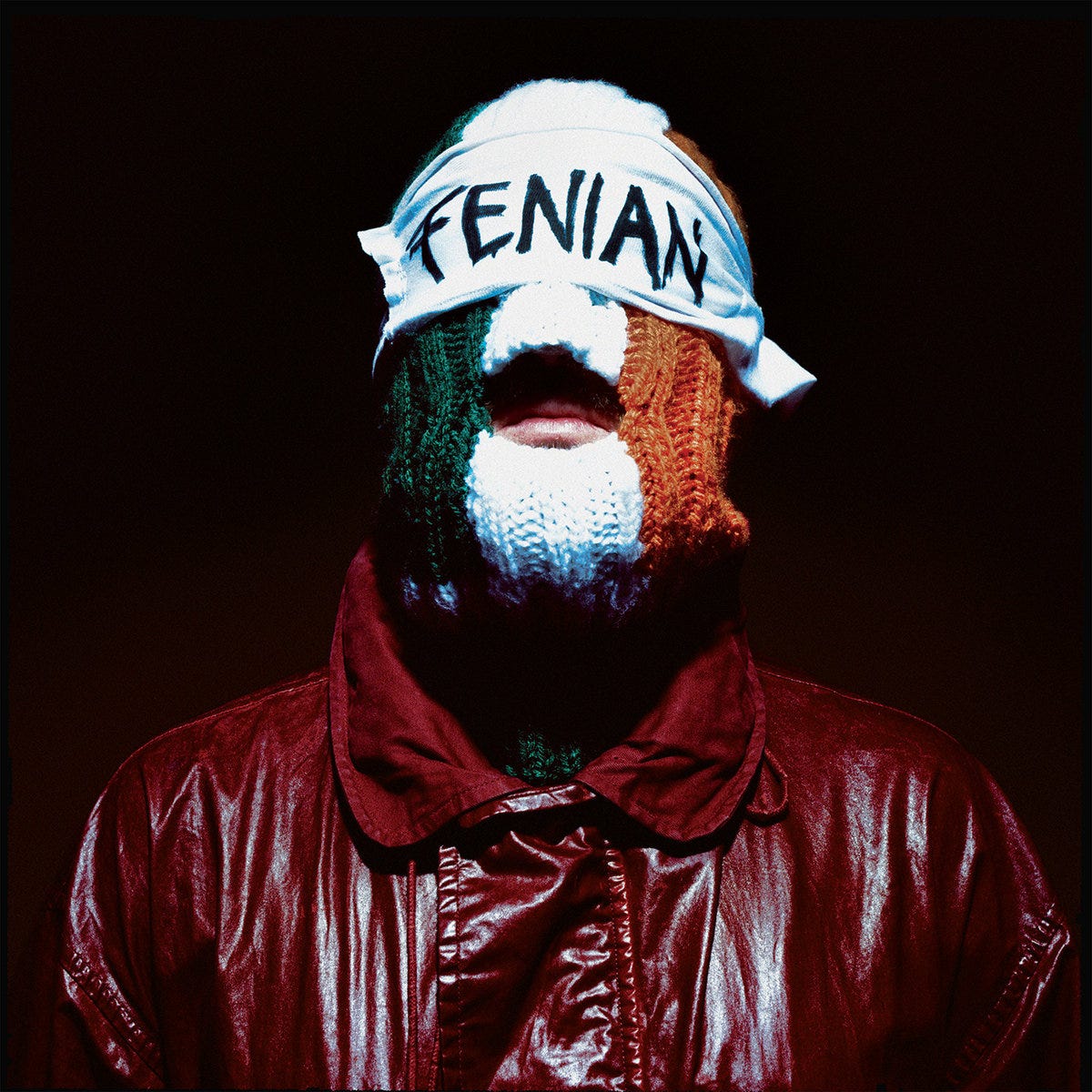
The album isn't called "Reclaiming Our Heritage" or "Words Have Power: One Band’s Journey." (That would be lame AF) It's called Fenian, and if you don't know what that means, they're not going to stop and tell you (that’s the whole point). The audience that gets it finds them. The audience that doesn't wasn't theirs to begin with. More.
Brand play: Most brands that want to talk about identity write a manifesto. Kneecap named the uncomfortable part first and let their work speak for itself. There's a version of this for brands who keep workshopping their "brand values" document instead of just making something that demonstrates the values. Name it. Ship it. Ideally, stop explaining it and just do it.
An 18-Year-Old Fashion Intern Figured Out That Taste Is a Political Weapon
Ella Devi is a Parsons student who works at a fashion brand. She went viral for revealing that Pete Hegseth's wife wore a dress from Temu to the White House Correspondents' Dinner, and that Erika Kirk's gown came from the Saks’ clearance rack. She operates on the thesis: right-wing women have bad taste because they have less proximity to people with good taste.
What's interesting isn't the politics (although I think she may have a point). It's the format. Devi turned fashion sourcing into investigative journalism. She's finding receipts. The clearance tag, the Temu listing, the price point. It resonates because it offers a framework that feels objective. It’s just researchhhhh, calm downnnn. More.
Brand play: Showing the evidence behind a brand is a tried and true format. A brand that can show the material cost, the production story, or the sourcing chain of its own product in the same "I found the receipt" slant is a helpful and transparent story. Don't explain why your thing is good. Show the proof. Let the audience draw the conclusion.
Social execution: "What this actually costs." Take one product. Show the material. Show where it's from. Show the stitch count or the ingredient list or whatever your version of "the receipt" is.
Billie Eilish Said Meat Eaters Can't Love Animals and the Internet Split Along Class Lines
In an Elle interview, Billie Eilish said eating meat is "inherently wrong" and that you can't say you love animals while consuming them. The backlash was immediate. Critics on the left called it privileged. Critics on the right called it preachy. Billie responded by posting slaughterhouse footage to her Instagram Stories and telling people to “stay mad.”
A celebrity's moral stance would have been a 48-hour news cycle story two years ago, but now it’s a week-long class debate. People aren't arguing about whether Billie Eilish is right. They're arguing about who gets to have food ethics in the first place. The class dimension is new. The conversation shifted from "Is veganism good?" to "Who can afford to care?" That's a different conversation (and it’s refreshing to see we’re finally having it). More.
Brand play: If your brand touches food, nutrition, wellness, or sustainability, pay attention to the framing here. The audience isn't rejecting ethical positioning. They're rejecting ethical positioning that ignores economic reality. Any campaign that says "choose better" without acknowledging that "better" costs more is going to hit the same wall Billie did. The brands that will land this conversation are the ones that make the ethical choice and also the affordable one (and prove it with pricing, not manifesto copy).
Social execution: Poll or carousel on Instagram. "What would you change about your diet if cost wasn't a factor?" No brand positioning in the caption. No "here's what we think." Just the question. If you sell a product that makes ethical eating cheaper or more accessible, let the comments surface that naturally. If you don't sell food, stay out of this one entirely.
The World Cup is Fashion First
The FIFA World Cup starts June 11 across the US, Mexico, and Canada. Levi's dropped a Football Association collaboration, Wales Bonner made snake-print adidas Predators, Willy Chavarria sent models down a runway carrying footballs, AVAVAV did ironic sport-fashion hot pants, and a collective called Pattern Up released a Palestine x England kit with proceeds going to Gaza.
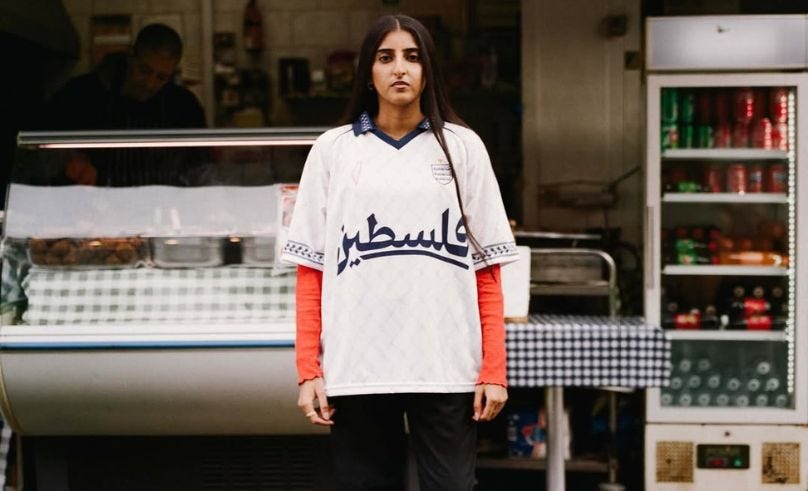
This is the first World Cup hosted across three countries simultaneously. It's also a HUGE opportunity for fashion brands (and they are taking advantage). Four weeks before kickoff, the discourse is about what everyone is wearing (not who's going to win).
Brand play: If your brand is planning World Cup content, understand that this tournament is being processed through fashion and identity, not just soccer (football). The audience that's already engaged isn't watching for tactical breakdowns. They're watching for the cultural moment. Your entry point is the viewing party and the outfits.
READ THE ROOM: The Supreme Court Hit Pause on Abortion Pill Access, Then Immediately Hit Pause on the Pause
Justice Alito issued a temporary stay on May 4, blocking an appeals court ruling that would have required in-person prescriptions for mifepristone nationwide. Mifepristone is used in over 60% of U.S. abortions. The appeals court ruling was immediate and national in scope, which meant for roughly 24 hours, the legality of receiving abortion medication by mail was genuinely unclear. The case, Louisiana v. FDA, will continue. Nothing is settled. It will likely reach the Supreme Court again. More.
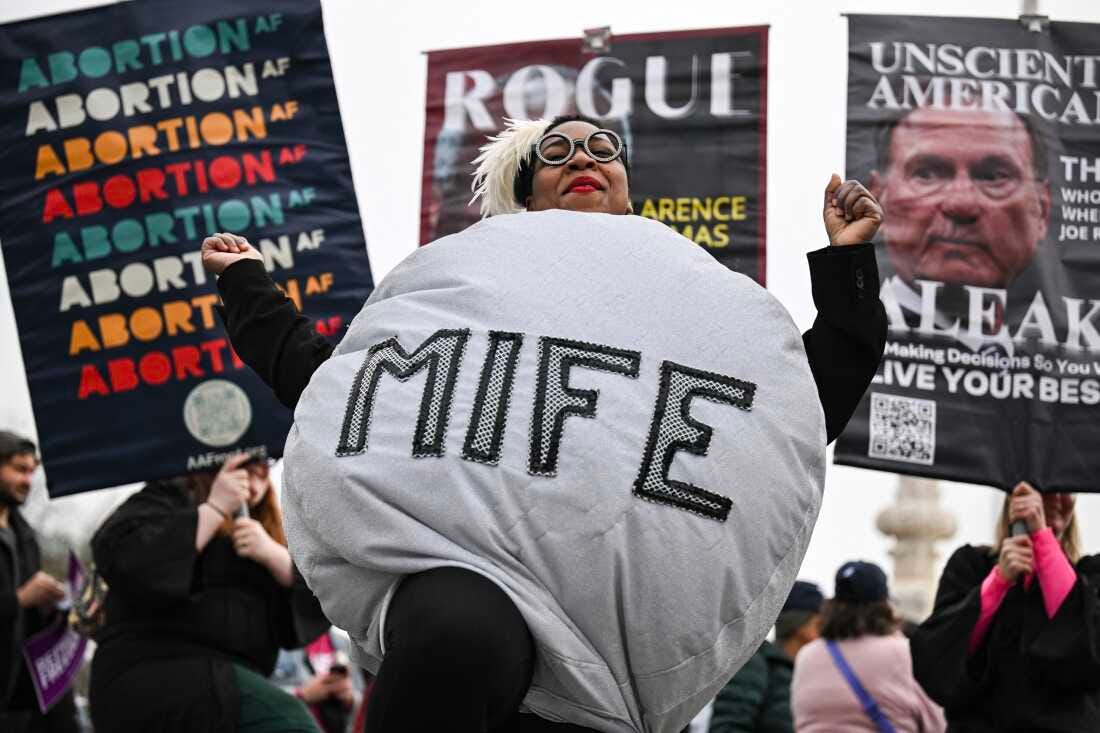
Brand guidance: This is a week where reproductive rights conversations will appear again. Brands that posted statements after the Dobbs decision in 2022 will be asked whether they still mean it. There is no safe middle ground on this topic and there hasn't been for years. If your brand has a stated position on employee reproductive healthcare, make sure your internal teams know what it is this week. If your brand does not have a stated position, do not invent one on social media.
If you’re new here, I write a monthly serialized novel called Everything is Advertising, about a burned-out Creative Director and his cynical team that accidentally create QAnon through a viral marketing campaign. If you like that kind of thing, you can start at Part One and catch up from there.
Every Monday, Below the Fold talks through the stories behind the brands.
Every Friday, The Business of Advertising shares lessons from over a decade working on the front lines of advertising.
I've never heard tis term before - need to look more into the history.