

A woman posted a photo of M&Ms and pretzels from a Las Vegas hotel room. Her husband and kids were downstairs at some gaming arena. She was alone for the evening, eating snacks and watching Netflix.
Ten years ago she was a single mom. She was dating someone who wasn’t good for her or her son. She was living paycheck to paycheck and had no idea what her future looked like. She ended the post: “So I’m going to set my phone down, eat a few more pretzels and m&ms, and be grateful.”
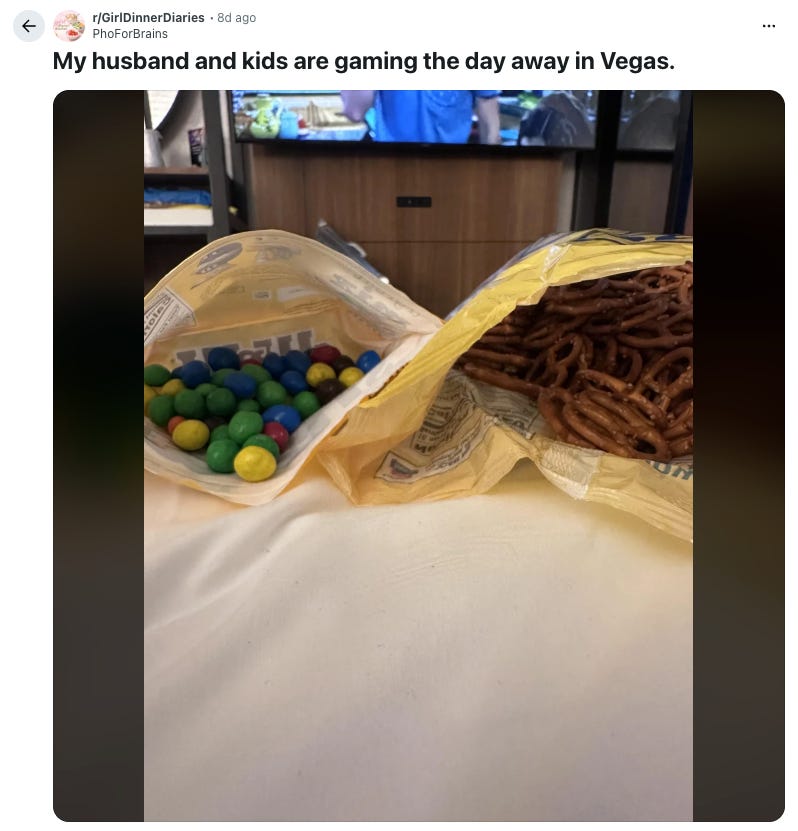
The post went up on r/GirlDinnerDiaries, a subreddit where women share a photo of whatever they’re eating and share a confession or story along with it. The food is incidental, the point is the story.
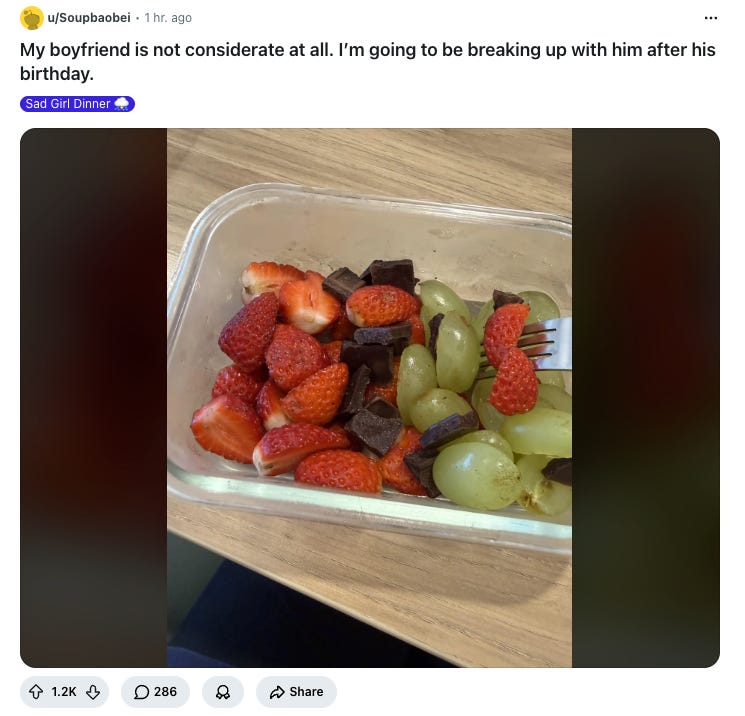
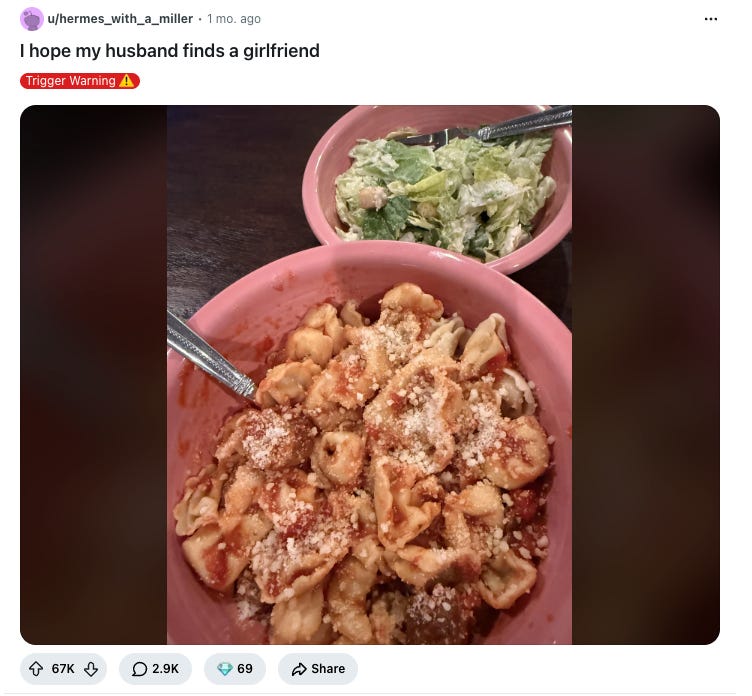
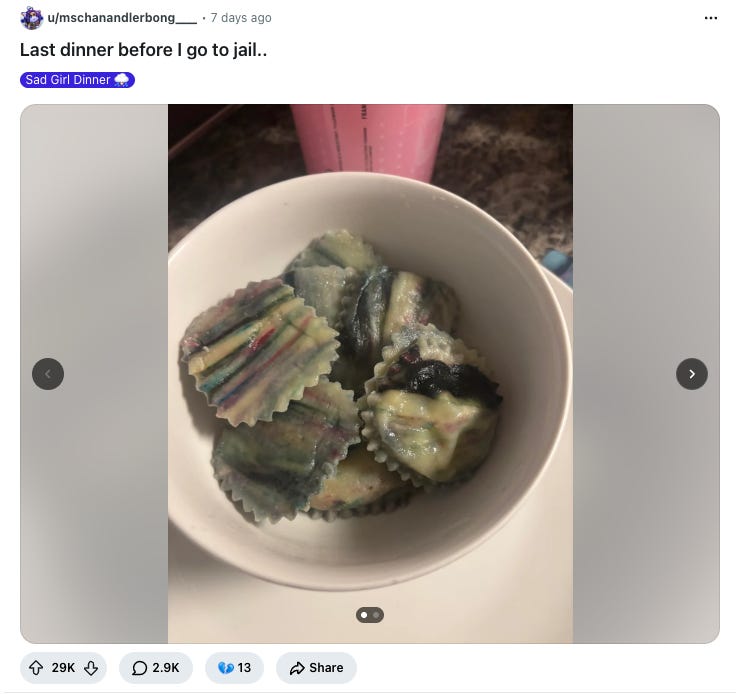
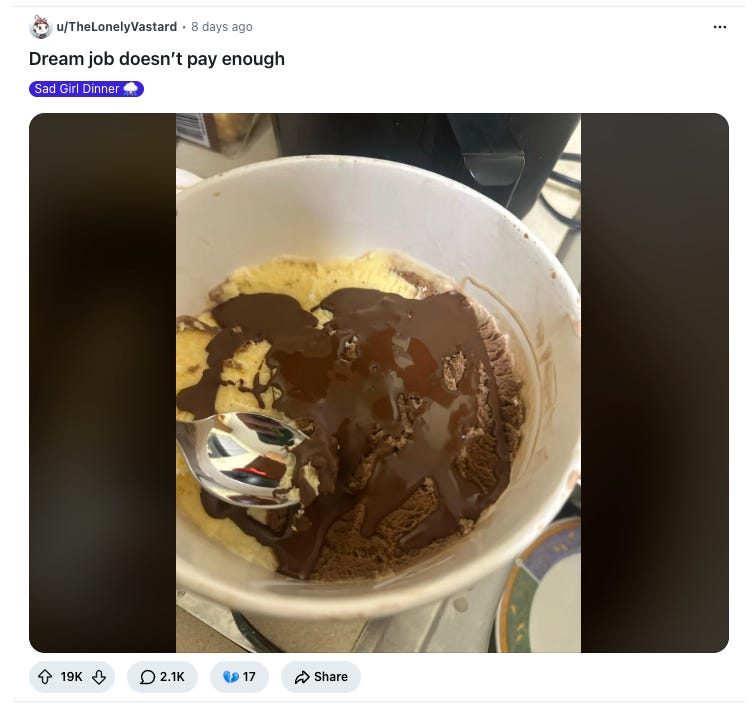
I look at this Reddit almost nightly before I go to bed. I like reading the stories and seeing the bad food photos. It also makes me feel connected to these women, the way they’re sharing these stories and confessions is so vulnerable.
It’s funny, that word “vulnerable” has shown up so much in my professional work too. Every brand wants to be authentic and vulnerable with their audience. They want to feel human. Brands want the feeling of r/GirlDinnerDiaries. They want the rawness, the emotional connection, the comment thread where a thousand women say “I’ve been there.” They want the engagement rate of a woman eating pretzels alone in a hotel room and telling you the truth about the last decade of her life.
They just don’t want the actual conditions that produce it.
Because the conditions aren’t really brand safe (no production value, no narrative arc, no call to action, no trending audio, no good lighting, no face). It’s not really a good campaign, it doesn’t feel polished and pretty and real.
TikTok is not the ideal place to pull this kinda thing off, if you really want to create the performance of vulnerability that is going to drive engagement. But you do still have to think about getting good lighting on your cry face, and pairing your deep confession with a good trending audio. You gotta film the breakdown, then film the recovery, then (seamlessly) sell the skincare routine that cleared your stress acne. Nobody even sees the little #ad at the bottom. The algorithm will reward the appearance of honesty, which is different than honesty.
Every few months, some brand will try to reverse-engineer authenticity. They’ll launch a campaign about “real moments” or “unfiltered stories.” They’ll cast real people instead of models, but everything else will be carefully staged. Legal will approve all copy, on set, the moodboard will say “ vulnerable but also aspirational,” and we will end up adding a product shot just because there’s still time in the day.
Meanwhile, a woman in a subreddit will post a photo of cold leftovers and write three sentences about her divorce, and 900 people will be on board.
I don’t have a tidy takeaway here. I’m not going to tell you what brands should learn from this, because the lesson is one they can’t really use. The most honest place on the internet works because nobody is selling anything. The moment someone tries, it stops working. Maybe some places are just meant to be unbranded.
Maybe that’s the lesson. Maybe it’s okay for some parts of the internet to just be for people, for human connection.
Xx, Caitlin
If you’re new here, I write a monthly serialized novel called Everything is Advertising, about a burned-out Creative Director and his cynical team that accidentally create QAnon through a viral marketing campaign. If you like that kind of thing, you can start at Part One and catch up from there.
Every Monday, Below the Fold talks through the stories behind the brands.
Every Friday, The Business of Advertising shares lessons from over a decade working on the front lines of advertising.